

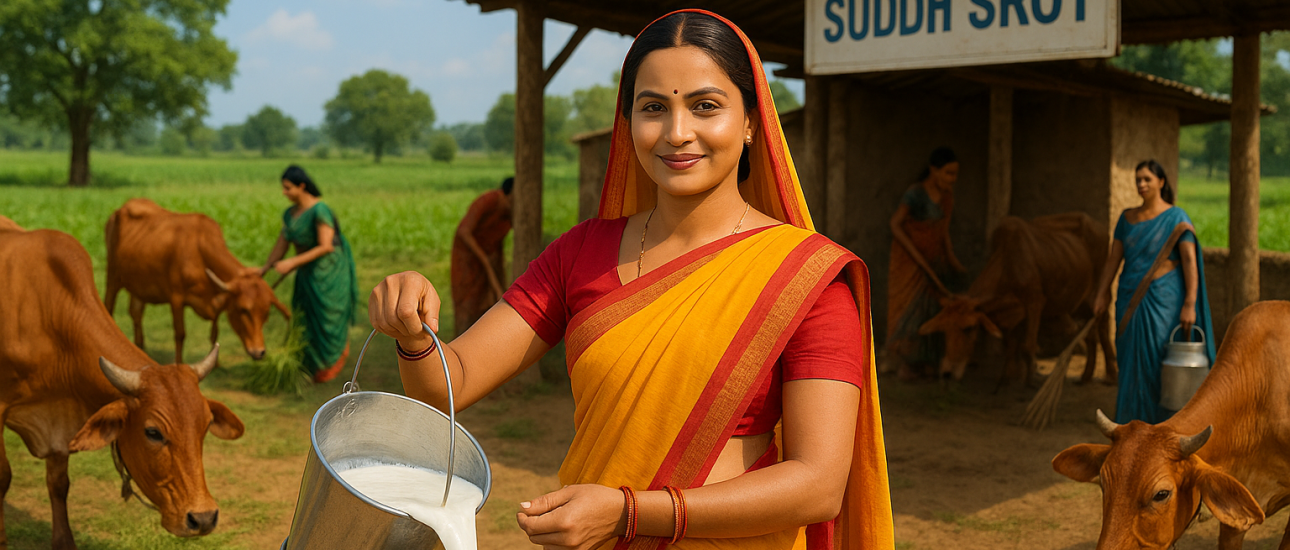
In rural India, dairy farming is more than an income source — it is a pathway to empowerment, especially for women. Across villages, women play a central role in feeding, milking, and caring for cattle, yet their contributions often remain unrecognized. Strengthening women’s role in dairy not only uplifts households but also drives the growth of the entire sector.
Why Women and Dairy are Connected
1. Ownership and Decision-Making
Dairy farming allows women to own and manage productive assets like cows or buffaloes. This ownership builds confidence and decision-making power within the family.
2. Steady Income and Financial Independence
Milk sales provide a regular cash flow, enabling women to contribute directly to household expenses, children’s education, and healthcare. Financial independence boosts their self-esteem and community status.
3. Employment at the Doorstep
Dairy work can be done at home, allowing women to balance income generation with family responsibilities. This is especially valuable in areas with limited job opportunities.
4. Skill Development
Through training in animal health, breed improvement, fodder cultivation, and milk processing, women gain technical expertise that improves productivity and income.
Impact on Dairy Development
1. Higher Productivity
Empowered women take better care of animals, leading to higher milk yields and healthier livestock.
2. Improved Quality
Women often follow meticulous hygiene in milking and storage, improving the quality and safety of milk supplied to markets.
3. Community Development
When women earn more, they reinvest in family welfare — better nutrition, healthcare, and education — creating a ripple effect that benefits the entire community.
Role of Organizations and Cooperatives
Dairy cooperatives, self-help groups (SHGs), and Farmer Producer Organizations (FPOs) have been instrumental in giving women access to training, markets, and fair prices. Many successful dairy brands in India began as women-led cooperatives.
Conclusion
Empowering women through dairy development is not just a social goal — it’s an economic strategy. When women farmers are trained, supported, and given equal opportunities, dairy productivity rises, household incomes grow, and rural communities thrive.

